Research & validation
OptionaleRank
View free plan ↗Free
Why this tool
A focused initial research route; paid plans are optional.
Check real listings before trusting estimates.

Launch an Etsy print-on-demand operation with a narrow product family, a validated supplier, controlled listings and enough cash for fulfillment.
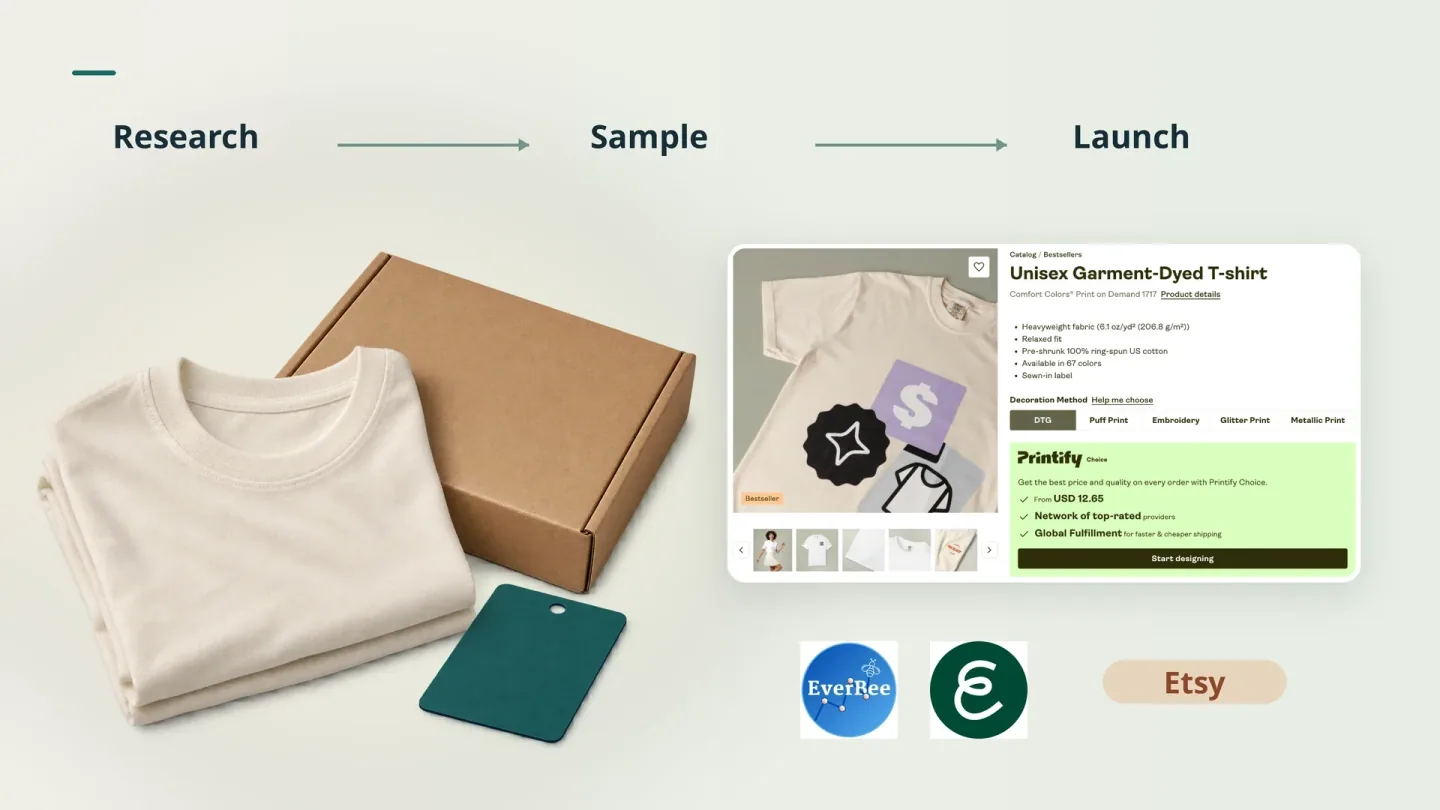
I’d launch one product family and prove the whole loop with a small listing set: check demand, order a sample, price delivery and track the first order. If fulfillment or the numbers fail on that run, I’d fix that specific issue before adding more designs or another subscription.
Pick a specific buyer and purchase reason: for example, an original personalized gift for a defined occasion, not a general collection of unrelated slogans. Choose a blank and a print method that fit the artwork and the target buyer. Use competitor and keyword research to understand the language buyers use, not to copy designs or infer exact competitor revenue.
eRank and EverBee can help narrow a topic, but the data is a signal, not proof of a sale. EverBee estimates should never be treated as actual competitor transactions. Start with the free or minimal plans while you decide which questions require more data. Check creative rights and Etsy’s product eligibility and disclosure rules before designing a batch.
Buyer: Specific occasion; Design: Original concepts; Blank: One product type; Listing: Small test batch
Compare equivalent products from Printify, Printful and Gelato using the same variant, placement, print method and delivery market. Record delivered cost, sample quality, production expectations and the provider’s issue-resolution terms. A lower blank price is not automatically a cheaper delivered order. Confirm each supplier’s actual quote and order route.
Printify lets you evaluate a print-provider network; Printful and Gelato have different production approaches and catalogs. Choose one primary route initially so that product mappings, support and sample comparisons stay understandable. Keep a backup candidate documented, not connected as an uncontrolled duplicate fulfillment route.
Order samples and inspect color, print alignment, wash behavior where applicable, packaging and the customer’s likely experience. Document what you actually observed. A vendor’s product photo does not establish quality for your chosen design.
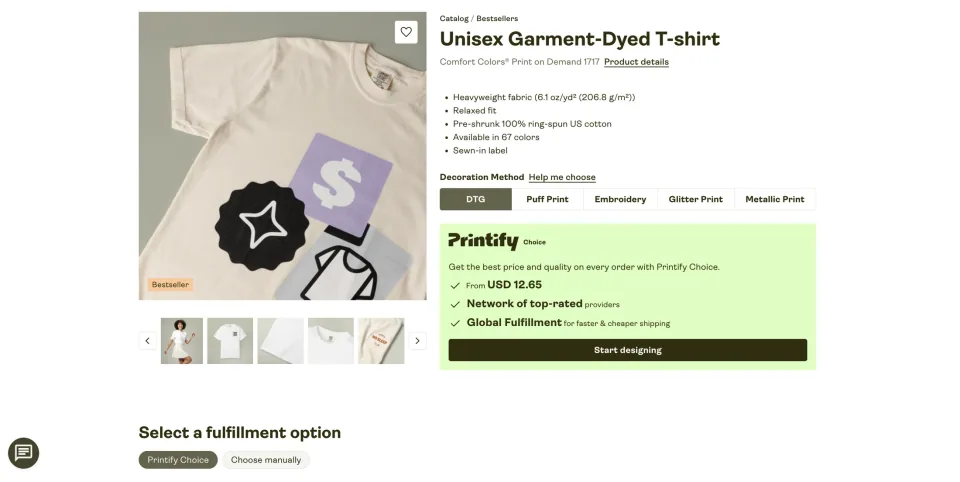
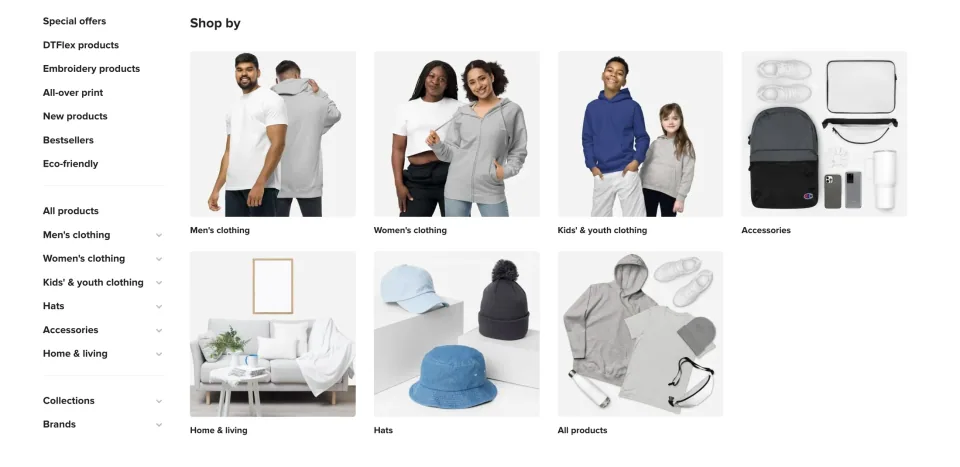
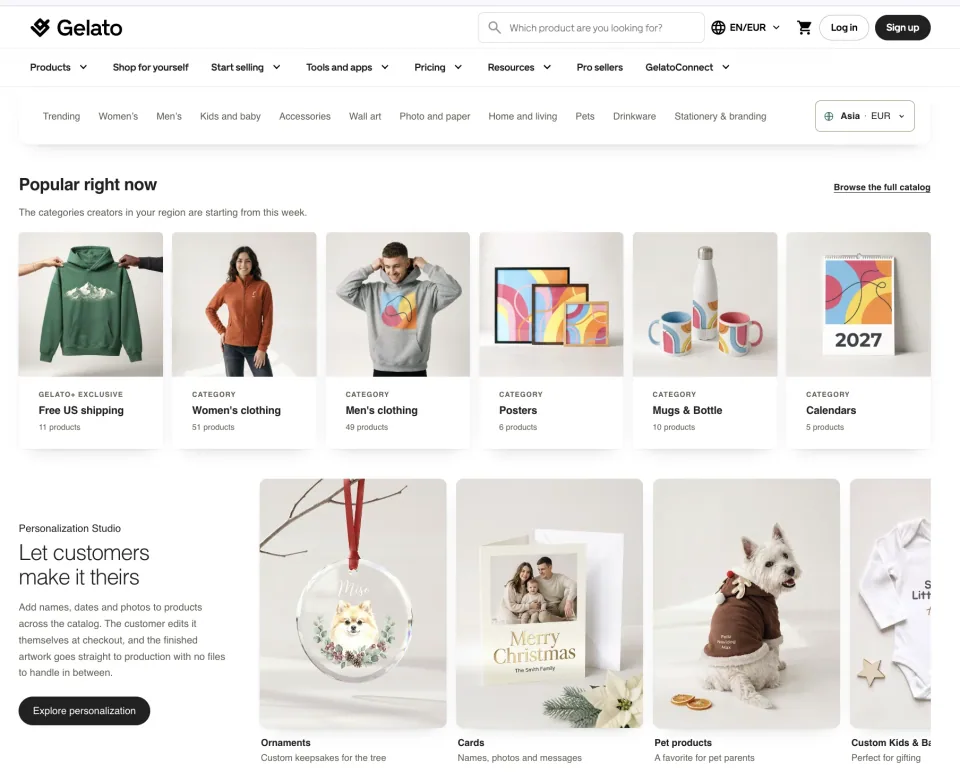
Match before price: Same blank, Same placement, Same destination; Record differences: Delivered cost, Sample quality, Issue handling
Etsy collects the buyer payment, while the fulfillment supplier charges your account separately. Settlement can lag production charges. A shop that receives ten orders can therefore need cash for ten products and shipping before payouts arrive. Keep a reserve for the orders you can actually fulfill plus a buffer for replacements or returns.
An illustrative delivered fulfillment cost of $15 per order requires $150 for ten orders; adding a $50 contingency produces a $200 planning reserve. This excludes listing fees, ads and other costs. Use the real provider quote and payout schedule, especially when holiday demand or a new-shop reserve could delay settlement.
Start with the free fulfillment plan unless a measured per-unit discount and stable volume support a paid plan. Set the price using contribution margin, account for the applicable Etsy fees, and avoid opening a second channel until the initial workflow is dependable.
Cash reserve updates with Orders before payout. Exact value is below the graphic.
Prepare a few distinct original designs within the same buyer angle. Each should have a different reason to buy, not only a color change. Create accurate images, size and care information, shipping and processing expectations, and the production partner disclosure. Publish one listing first and inspect its actual state on Etsy.
For early orders, use a controlled approval process and verify the mapping, artwork, variant and destination before manufacturing. Personalized orders should include a clear proof or review workflow. Track production costs, shipping, customer messages and support incidents as they happen.
After initial traffic and genuine orders, review listing visibility, clicks and conversion separately from contribution. If traffic is absent, investigate the listing and buyer demand. If orders arrive but the margin is poor, repair pricing or fulfillment cost before expanding. If fulfillment creates repeated issues, stop adding listings until the provider or product has been corrected.
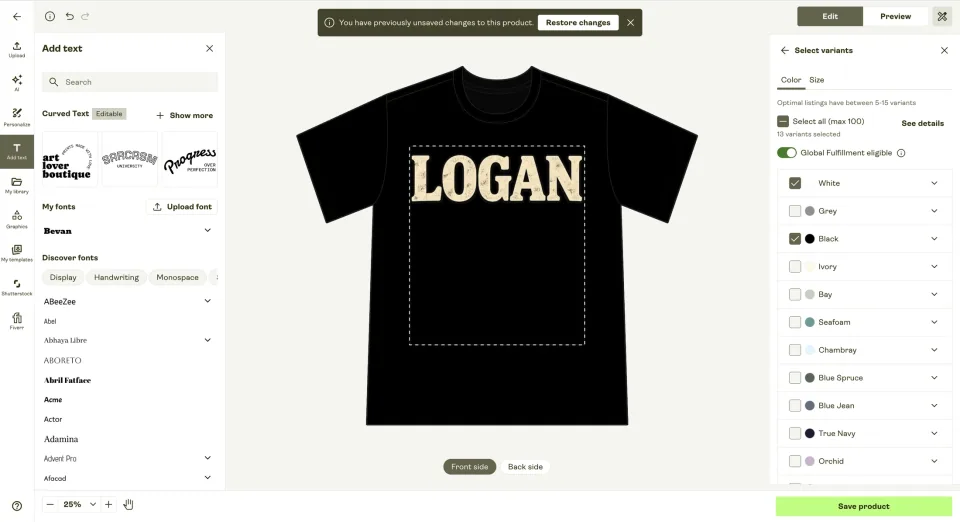
List: Verify one item; Approve: Check first order; Fulfill: Track and support; Review: Margin + issues
A new product family adds new blank and artwork constraints, new photos and more inventory mappings even when there is no physical stock. A new channel adds listing formats, fees, support and fulfillment routing. Expand the product family only after the first one can be operated consistently, and expand channels only when the additional workflow is justified.
The recommended stack is a shortlist of operating roles, not a requirement to subscribe to every tool. Keep subscriptions separate from working capital and record decisions by SKU. A successful launch means a reliable selling-and-fulfillment loop, not a guaranteed sales target.
Repeatable loop? Yes: Expand slowly, One new constraint. No: Fix first, Find failing stage
Vendor documentation and SellerPlanKit product evidence dated November 26–27, 2026. Prices are reference amounts, not account-specific quotes. Examples are explicitly illustrative. No new paid-account testing, performance benchmark or numeric rating is claimed.
The 2024 Printful–Printify merger led to the FYUL parent organization. What sellers can verify about the combined group, separate platforms and the operational decisions that still matter in 2026.
Read article →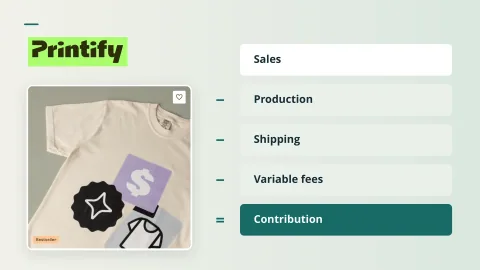
Calculate contribution per POD order after production, shipping and variable fees. Use it to test retail prices and subscription decisions without confusing sales with profit.
Read article →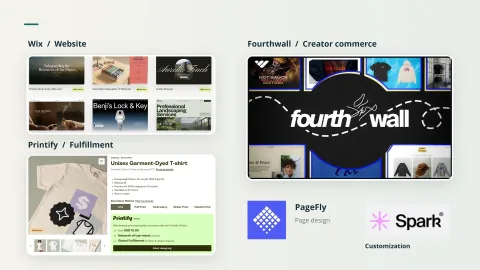
Five tools for five distinct seller bottlenecks: website building, fulfillment, creator commerce, Shopify page design and Squarespace customization.
Read article →