Spark Plugin review: is more design control worth another subscription?
★★★★★★★★★★3.8/5Editorial rating
Spark gives eligible Squarespace sites a visual layer for presentation, navigation and marketing. The real buying decision is whether the missing features justify an ongoing dependency.
If I had one page on an eligible Squarespace site that needed a design change I couldn’t make natively, I’d try Spark there first. I’d judge it on whether that page gets easier to use or maintain. Before paying, I’d check which changes stop working after cancellation and write that down for anyone inheriting the site.
Start with the site you already have
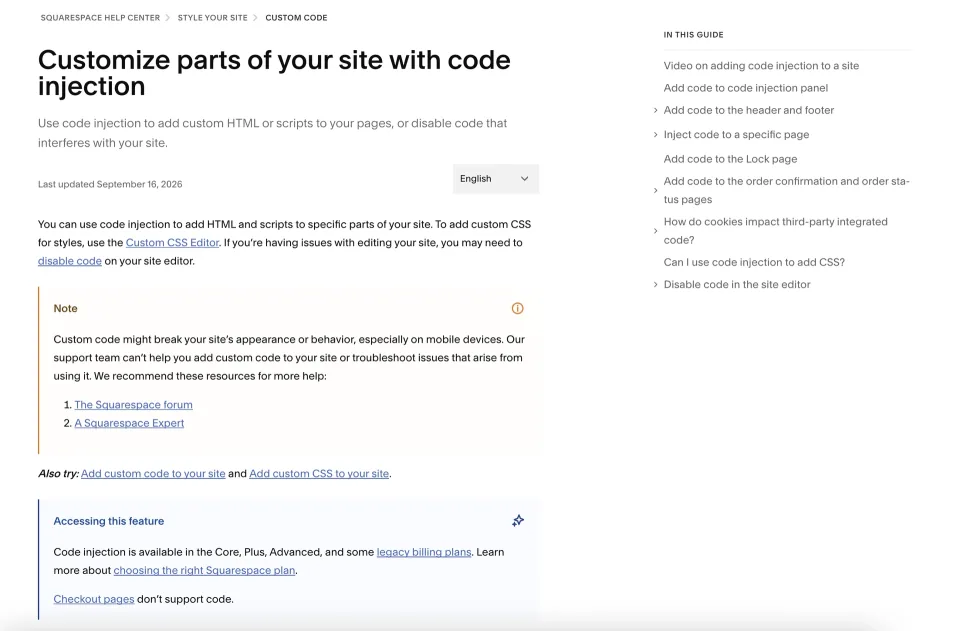
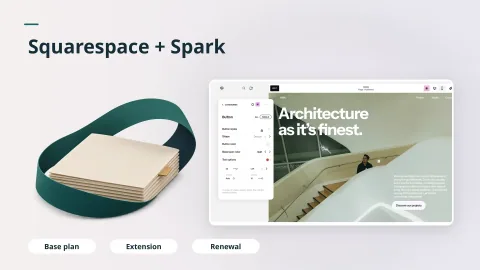
Spark sits on top of Squarespace. It does not provide hosting, inventory management, checkout or fulfillment. The vendor requires version 7.1 and access to Code Injection; current Core or higher plans qualify according to its pricing FAQ, while Basic and legacy Personal do not. Check the actual permissions in your account rather than relying on the plan name alone.
That distinction matters for a small shop on a budget. Upgrading the website plan just to install a design extension is a different purchase from adding the extension to a store that already needs Core. Price the two decisions together. If the underlying site cannot handle your payment country or product type, Spark will not resolve that problem.
Squarespace documentation explaining code injection and its plan limitations.
Where Spark fits
Spark extends the upper layer; the base selling workflow remains a separate purchase.sourced · Spark pricing and installation docs, checked 2026-11-27.Text description
SPARK: Presentation and navigation; SQUARESPACE 7.1: Compatible plan + Code Injection; SELLING OPERATIONS: Catalog, payments, orders
Check the current plan and compatibility before starting the trial.
Best for: Existing eligible Squarespace sites with a defined presentation problem.
Designers who need repeatable navigation or promotional changes.
Agencies willing to verify client retention terms.
Three changes I would actually test
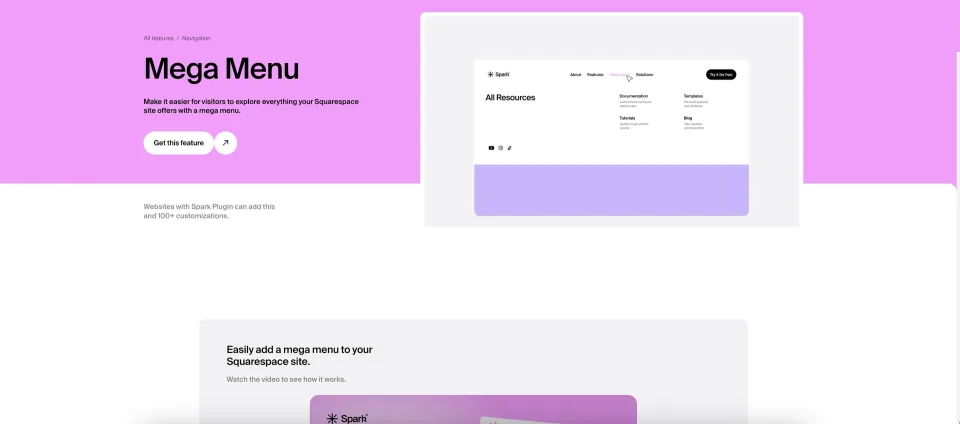
First, navigation. A shop with several collections may benefit from a richer menu or a clearer dropdown. A store with four products probably does not need a mega menu. Write down which category a visitor currently struggles to reach and compare the original and revised mobile navigation.
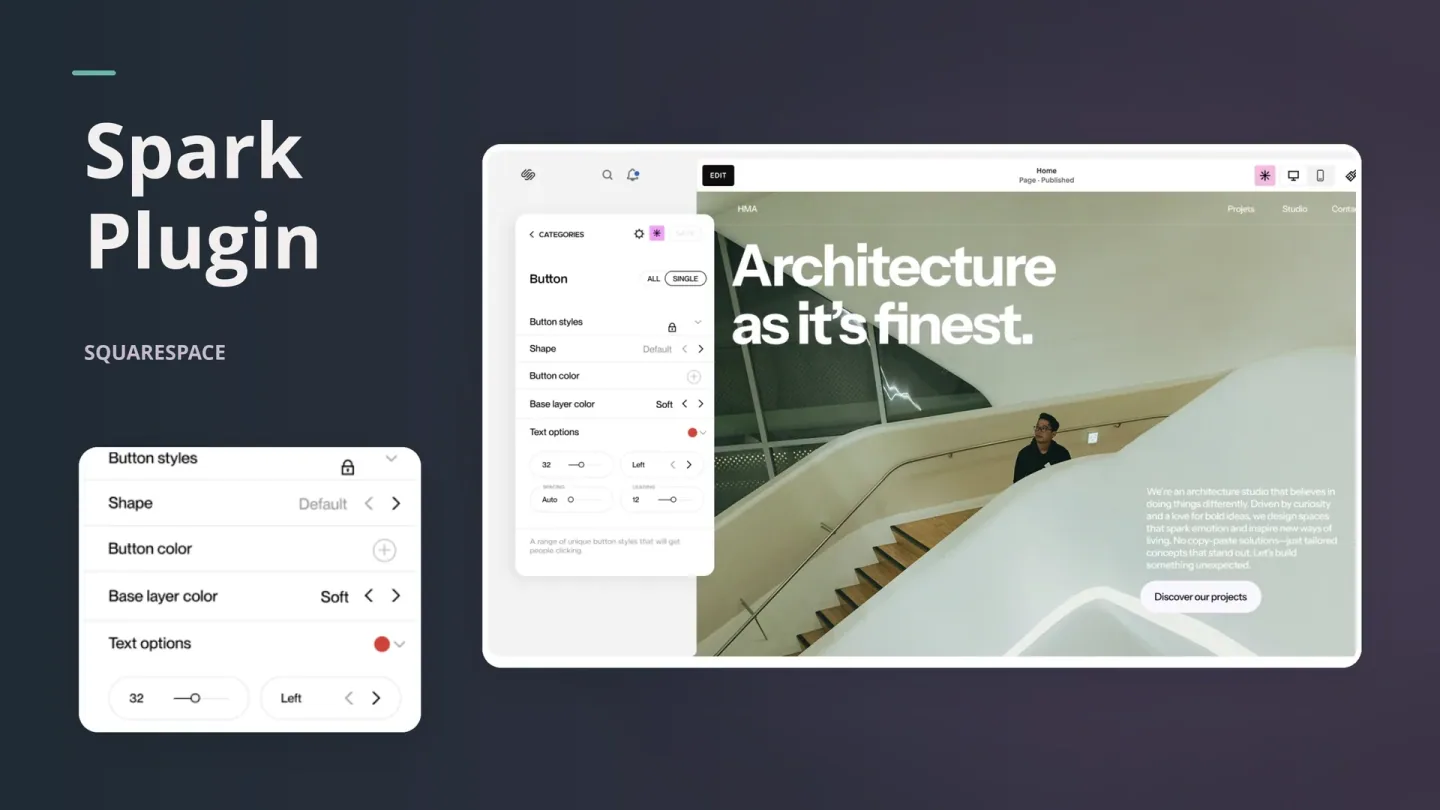
Second, product-page presentation. Spark’s text and styling options can help establish hierarchy without writing a series of CSS rules. Try a real product page with a long title, a variant selector and a prominent purchase button. A design that only looks good with ideal demo content will not survive a real catalog.
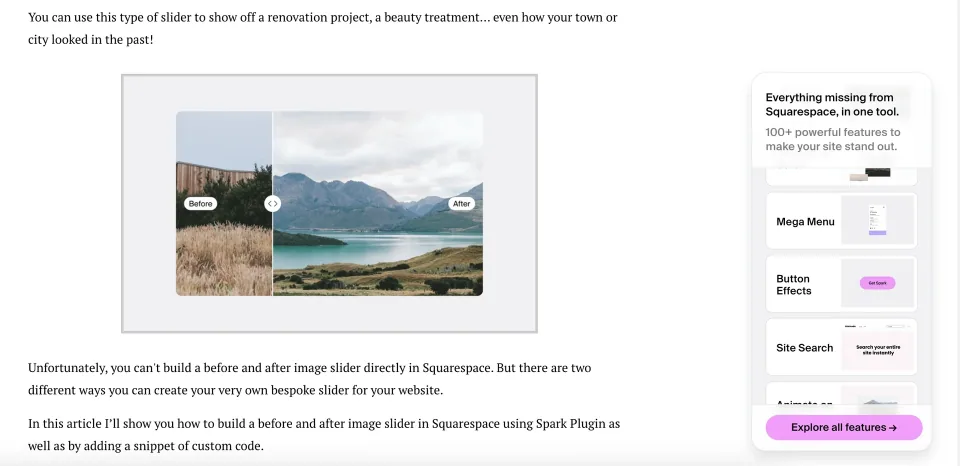
Third, marketing elements. Popups and announcement bars can give an offer a defined place in the customer journey. I would start with one message and a clear dismissal. If it covers the mobile purchase button or interrupts the first visit, the customization has created a new problem. Spark’s catalog also includes more advanced elements such as a logo carousel and before/after slider. A feature being available is not evidence that it improves conversion.
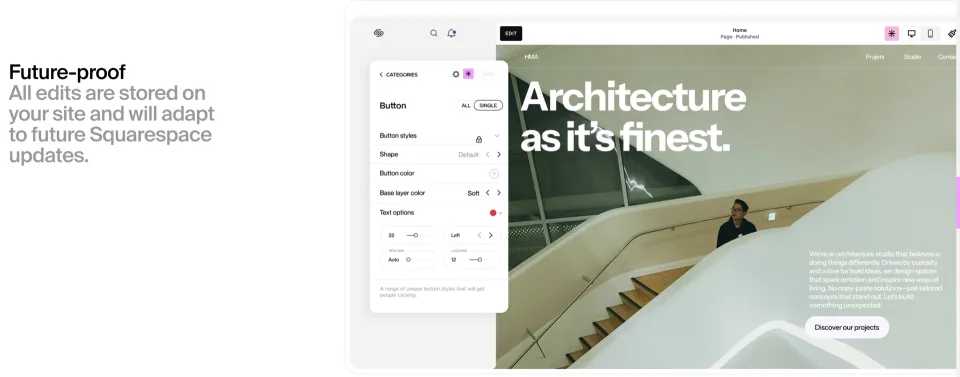
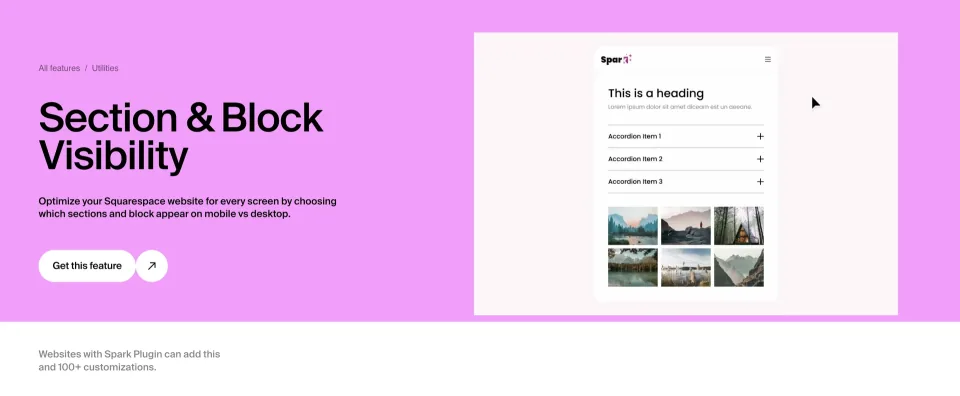
Spark Plugin vendor demonstration of a customizable mega menu.Spark Plugin demonstration of design controls within a Squarespace page editor.Spark Plugin demonstration of section and block visibility settings.
Test hierarchy on a real product
The mockups illustrate an editorial test: can a buyer identify the product and find the purchase action?conceptual · Editorial decision model; no measured product performance.Text description
Two fictional mobile product layouts, before and after. Stronger purchase button and hierarchy on the right.
The part of Spark I would investigate most carefully
A recurring design dependency deserves the same scrutiny as any other subscription. According to Spark’s pricing terms, Personal and Business customizations become hidden if the subscription ends and can return after resubscription. Agency offers retention after a qualifying annual subscription or twelve months. I would want that distinction in writing before agreeing to a client handoff.
This is not the same thing as losing all your original Squarespace content. The risk is that a published design may look or behave differently without the extension. Keep a record of which elements depend on Spark and whether native equivalents exist. Test what a critical page looks like without the enhancement before promising a design to a client.
What survives cancellation?
Retention is a license condition, not a claim about indefinite future editing.sourced · Spark plan FAQ reviewed 2026-11-27.Text description
Personal / Business: Styles hidden, Renew to restore, Owner pays renewal; Agency, qualified: Styles retained, 12-month condition, Confirm handoff
What the subscription needs to earn
Personal limits the selectable feature types to ten, with repeated use allowed. Business expands the available features and includes Pro tools. Agency adds client-oriented management and conditional design retention. A useful distinction is feature count versus site count: neither ten chosen features nor unlimited feature access automatically means unlimited websites.
The public price selector is not fully verifiable here. The November 26 profile retains provisional annual references for Personal and Business, and the Agency amount remains unresolved. Confirm the actual billing cycle and site allowance at checkout. The pricing article works through the combined cost rather than repeating the profile table.
For a modest shop, the subscription can be justified by time saved maintaining changes or by a specific improvement you can observe. I would not assign it a conversion uplift or claim faster loading without a controlled test.
Does the site need a Pro feature?
A required feature is more useful than a long feature list when selecting a plan.conceptual · Editorial decision rule; check your actual account and requirements.Text description
Required Pro feature? Yes: Business, Check entitlement. No: Count types, Ten or fewer?
Use the trial as a small acceptance test
The vendor advertises a 14-day trial without a card. Use it on one or two representative pages. Record the native baseline, install the extension according to the vendor’s instructions, implement only the changes you need, then open the published pages while signed out. A change visible in the editor is not enough.
Check the product page on a narrow phone, keyboard navigation, popup dismissal, text contrast, checkout entry and interaction with existing custom code. If you already have another extension styling the same element, isolate one tool at a time. Compare the page before and after using the same network and device if performance matters. No production storefront or paid Spark account was tested for this review.
Spark Plugin tutorial showing a before-and-after image comparison slider.
Trial acceptance path
Treat the trial as a test of a defined selling task.conceptual · Editorial workflow; checkpoints are recommendations.Text description
Baseline: Save screenshots; One page: Add the feature; Mobile: Keyboard + checkout; Decide: Keep or remove
Where I land
For a seller who manages a design-led Squarespace site and keeps encountering small presentation limitations, Spark is a sensible shortlist candidate. For a designer handing over many client sites, retention and license details matter more than the initial advertised rate. For someone who only needs a single pricing table, native blocks or a narrowly licensed plugin may cost less over time.
I would buy only after a real page has passed the trial and the owner knows what happens if the subscription is canceled. If the feature list has become the reason for the purchase, rather than the business problem, wait.
Questions before you decide
Does Spark work on Squarespace Basic?+
The vendor requires Code Injection on Squarespace 7.1; Basic and legacy Personal are excluded.
Will Spark improve sales?+
No uplift is established by the feature documentation. Measure a defined change on your own store.
Can I use Spark on Shopify?+
No. Spark is a Squarespace extension; it is not a Shopify page builder.
Research scope
Vendor documentation and SellerPlanKit product evidence dated November 26–27, 2026. Prices are reference amounts, not account-specific quotes. Examples are explicitly illustrative. We scored fit for the intended design job (30%), documented workflow (25%), operating dependencies and portability (25%), and cost (20%). The editorial score reflects documentation review. No new paid-account testing or performance benchmark was conducted.
Some links may earn a commission where an affiliate relationship exists. Product facts come from published profiles; recommendations are editorial. Affiliate disclosure