Webflow is a visual website development platform with managed hosting, structured CMS collections and a separate native Ecommerce plan family. It favors teams that value custom design and content models, with important limits around recurring commerce, localization and export.
★★★★★★★★★★3.7/5Editorial rating
Website BuildersCore Platform
Our verdict
★★★★★★★★★★3.7/5Editorial rating
I’d shortlist Webflow when the design and content structure are the reason to buy. Before paying for Ecommerce, I’d model a representative product with its variants and count how much catalog allowance it uses. For a merchant who needs localized checkout or a low-maintenance fulfillment setup first, I’d start elsewhere.
Why this rating?
Strong design and CMS control earn the shortlist. Store operations take more planning, and exporting site code does not move a working checkout or CMS.
Research & assessment details
Documentation-based assessment by SellerPlanKit Editorial. No hands-on benchmark.
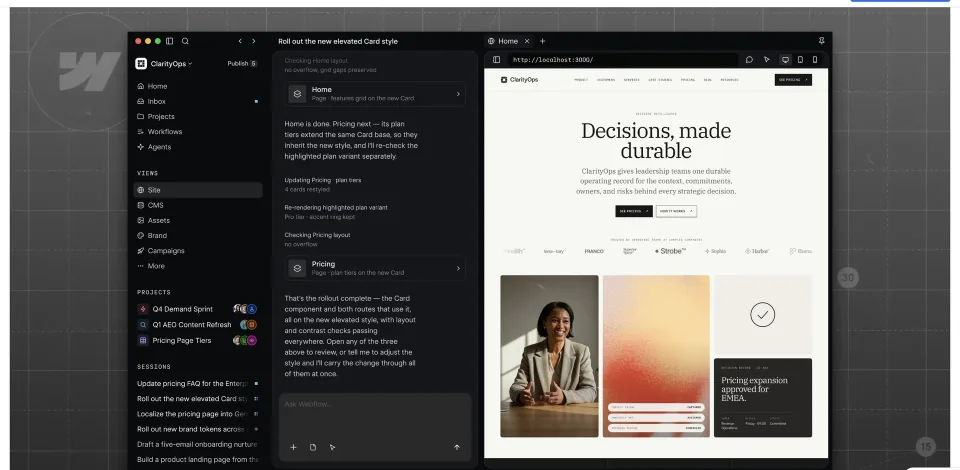
Webflow appeals to me for a content-heavy brand site that needs reusable templates and deliberate layout control. Its visual designer exposes web layout concepts such as breakpoints, flexbox and grid. That flexibility is useful when a site needs a consistent product or campaign presentation, but someone still has to build and maintain the design system. A solo seller seeking a turnkey store should weigh this work against the benefit.
The Designer gives you a live view of how layout and styling choices affect the page.
Understand the 2026 plan structure
The May 2026 Site plan update moved the former CMS and Business plans toward Premium, with 20,000 CMS items and 40 collections. Basic serves static sites without a live CMS; the free Starter plan is a constrained prototype. Site plans cover individual hosted websites, while Workspace plans govern a different set of collaboration and development capabilities. Ecommerce Standard, Plus and Advanced are separate selling plans. Do not buy Premium expecting native checkout to be included.
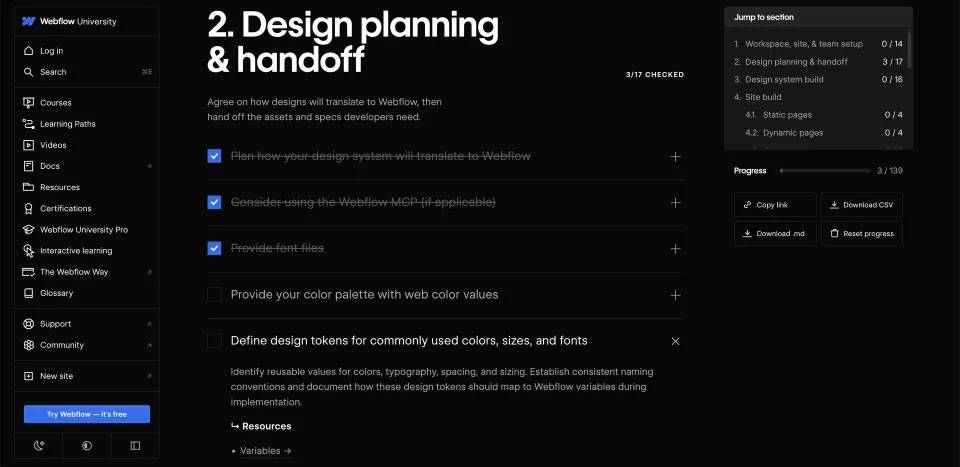
Map who needs access to the workspace and site before choosing a plan.
Catalog size is not the number of products
Native Ecommerce allows custom cart and checkout design and uses Stripe or PayPal. Its 500, 5,000 and 15,000 item allowances include products, variants and categories, not just parent products. For example, 100 items with five variants each can exceed Standard once all counted records are included. A parent product also has a limit of 50 variants and three option axes. Check both the item count and individual product limits before committing. Standard adds a 2% transaction fee; Plus and Advanced remove that platform fee while processing costs remain.
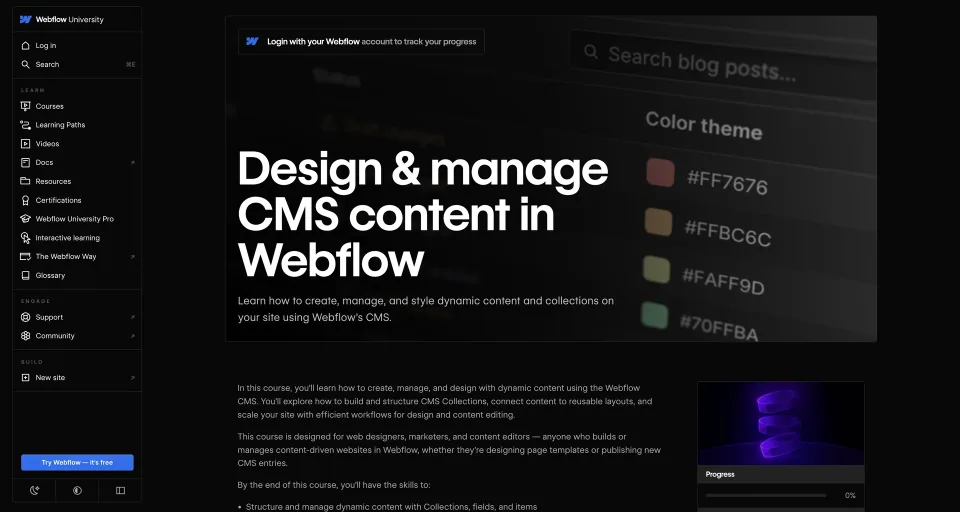
The CMS guide helps distinguish content collections from the separate ecommerce catalog.
Recurring products, international stores and fulfillment
Native User Accounts was retired on January 29, 2026. Existing Stripe subscription charges may persist, but a new membership workflow needs third-party services. Webflow Localization does not support the native Ecommerce feature set. The former direct Printful integration was also retired; the documented Make workflow adds a dependency to monitor. These are decisive limitations for a subscription-led, multilingual or POD-first business, even if the design tools look attractive.
Export is a starting point, not a working migration
An eligible Workspace can export static site code, and CMS and commerce collections have CSV export options. Dynamic CMS content, checkout, forms, localization and password protection do not survive as functioning features in a static export. Plan replacements for every needed backend service and verify access controls before publishing elsewhere. If native checkout is essential, test the entire payment, order and fulfillment journey before designing a large catalog.
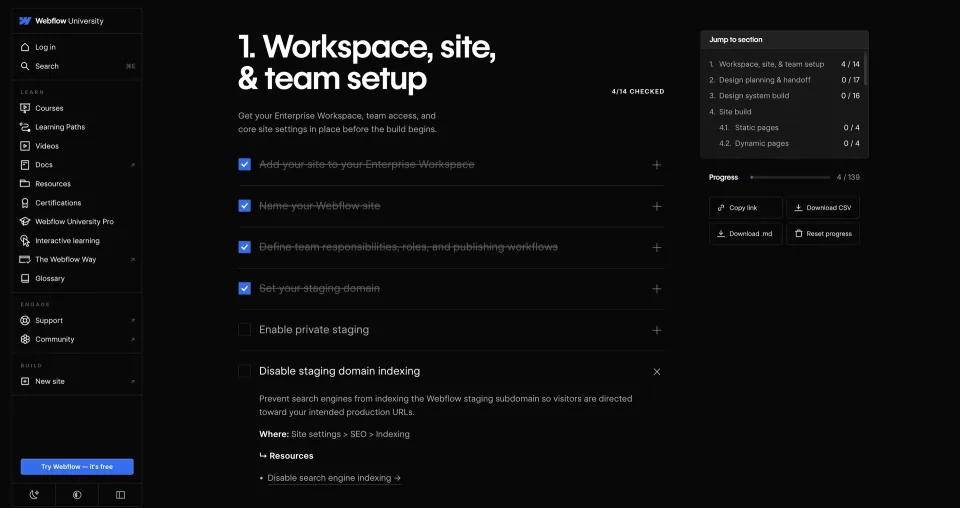
Document dependencies during handoff so you can see what a migration would need to rebuild.
Research basis
This profile uses Webflow pricing, the 2026 plan-change notice, Ecommerce, export, localization and retirement documentation checked November 26, 2026. No store was freshly built or benchmarked. Existing customers may remain on earlier billing until their applicable renewal; account checkout terms take precedence.
USD reference pricing checked November 26, 2026. Annual values are total billed amounts calculated from vendor monthly equivalents; month-to-month Ecommerce rates are from an indexed vendor article. Site Basic/Premium reflect the May 2026 change. Existing customers may transition at renewal. Workspace, localization, bandwidth and external membership or automation services can cost extra. Team is an annual-contract platform plan, not a native Ecommerce tier. Confirm live checkout and taxes.
Listed prices may exclude taxes. Promotions and vendor terms can change; confirm at checkout.
AT A GLANCE
Key features
01
Visual designer with responsive breakpoints
02
Premium CMS: 20,000 items and 40 collections
03
Native custom cart and checkout on Ecommerce plans
04
Separate Site and Workspace billing
05
Static code export on eligible Workspace plans
06
CSV backup for CMS and commerce collections
How catalog records consume an Ecommerce allowance
Total records510
Remaining capacity-10
Enter the actual number of separate product, variant and category records. Compare the total with the native Ecommerce item allowance; other plan restrictions still apply.illustrative · Counts are examples. Webflow documents that products, variants and categories all count toward the Ecommerce allowance.Text description
A catalog budget sums products, variants and categories and compares that count with the selected allowance.
Features & compatibility
Vendor-sourced facts are based on published documentation; exceptions are labelled. Sources and check dates are grouped below each section.
Payments & operations6 items
Abandoned checkout recovery
Not verified
Unverified
Automated tax handling
Supported countries; merchant responsible
Checkout design control
Custom cart and checkout layout on Ecommerce plans
Native checkout payment providers
Stripe and PayPal
Platform commerce transaction fee
Standard 2%; Plus/Advanced 0%; processor fees separate
Platform paid-content fee
Depends on separate membership service; not native
Wix is a hosted website builder that combines visual editing, a store, bookings and business tools. It suits sellers whose branded website and day-to-day service or retail operations belong together, provided their required payment and fulfillment integrations are available.
Squarespace is a hosted website builder for design-led businesses, portfolios, online stores and paid content. Its current website plans support commerce at every tier, but transaction fees and premium editing or integration features make plan selection a business decision.
Bandzoogle is a hosted website and direct-to-fan commerce platform for musicians. Its strength is combining a band website, music downloads, merchandise, fan subscriptions and promotion in a single subscription, without a platform percentage commission.